What Is a Head-Up Display (HUD) and Its Display Technology?
Head-Up Display (HUD) technology is a critical component for enhancing vehicle safety, comfort, and user experience. Below are the key points automotive engineers should understand.
What Is a Head-Up Display (HUD) and Its Display Technology?
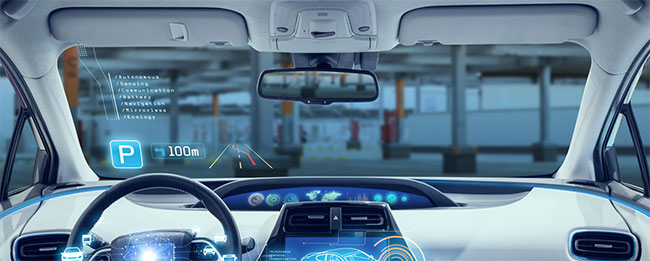
HUD systems project essential information onto the windshield or a dedicated combiner, allowing drivers to access data without significantly diverting their gaze from the road. Originally developed for aircraft, HUD technology is now widely adopted in modern vehicles.
HUD display technology refers to a group of optical, projection, and display‑control technologies used to overlay information within the driver’s or operator’s field of view. It serves as the fundamental platform for implementing HUD functionality and includes projection methods such as projectors, lasers, and LCD/DLP systems; optical designs utilizing combiners or windshields; and display‑control mechanisms such as viewpoint correction and brightness adjustment.
Key Points Automotive Engineers Should Know
- Types of HUD
- Combiner-Type HUD:Projects information onto a dedicated transparent panel. Cost-effective solution.
- Windshield-Projection HUD: Projects directly onto the windshield. Common in premium vehicles.
- Augmented Reality HUD (AR HUD): Overlays navigation and ADAS information onto the real-world environment. Represents next-generation technology.
- Information Displayed
- Speed, navigation, and telltales.
- ADAS-related data.
- For EVs: battery status and energy flow
- Technical Challenges
- Optical Design: Maintain visibility under varying light conditions through brightness and contrast adjustments.
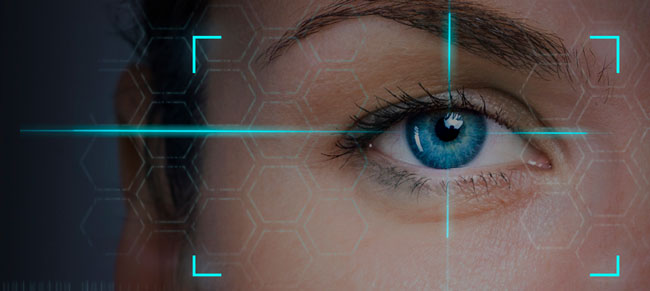
- Parallax Correction: Ensure accurate projection based on driver eye position.
- Environmental Durability: Resistance to temperature fluctuations and vibrations.
- Sensor Fusion for AR HUD: Integration with cameras, LiDAR, and GPS.
- Design Considerations for Driver Visibility
- Avoid cognitive overload from excessive information.
- Optimize font size, color, and positioning.
- Minimize driver eye movement.
- Future Trends
- Large AR HUD: Expands field of view for intuitive navigation and ADAS display.
- AI Integration: Dynamically selects information based on driver condition.
- Cost Reduction: Enabling adoption in mid-range vehicles.
Why HUD Matters in Modern Vehicles?
HUD plays a vital role in modern vehicles for three main reasons: enhanced safety,Integration with Driver Assistance Systems,and Improving comfort and UX (User Experience).
- Enhanced Safety
- Reduced Eye Movement: HUD minimizes the need to glance at instrument clusters or center consoles, lowering accident risk.
- Immediate Warning Recognition: Collision and lane departure alerts displayed within the driver's line of sight reduce reaction time.
- Integration with Driver Assistance Systems
- Intuitive ADAS Display: HUD provides clear visibility of ACC, LKA, and Blind Spot Monitoring status.
- AR Navigation: Overlays arrows and landmarks on real roads for improved guidance at complex intersections.
- Improved Comfort and UX(User Experience)
- Unified Information Display: Consolidates speed, navigation, and warnings to reduce cognitive load.
- EV-Specific Data: Displays battery level and energy flow, supplementing traditional meters.
The importance of HUD technology is further increasing from the following perspectives.
- Autonomous Driving Evolution: Level 2-3 automation requires continuous driver monitoring, making HUD indispensable.
- Stricter Safety Standards: Euro NCAP and NHTSA increasingly evaluate driver-assist visibility.
- Changing Consumer Expectations: HUD is now demanded in mid-range vehicles, not just luxury models.
Current Trends in HUD (2026 Edition)
HUD is rapidly advancing, with these trends shaping the future:
- Widespread Adoption of AR HUD
- Features: Real-time overlays of traffic conditions, hazards, and pedestrians.
- Advancements:
Virtual Image Distance (VID): Increased from 2.5m to 20m to reduce eye strain.
Field of View(FOV): Expanded from 10° to 20° for greater information density.
- The emergence of Panoramic HUD
- Converts the entire windshield into a dynamic display aligned with driver gaze.
- Integration with Autonomous Driving and EVs
- HUD serves as a critical interface for Level 3+ automation.
- EVs now show battery and charging info on the HUD.
Challenges Faced by Automotive Engineers in HUD Development
(Display Technology Related)
- Warping
Correction
- Background: Windshield curvature and driver position can distort projected images.
- Causes:
Small misalignments due to design errors or temperature changes. - Solutions:
Pre-distortion image processing.
Optimized mirror and lens configurations.
- Postcard Effect
- Description:A phenomenon where the HUD image has low contrast and the background looks washed out, especially at night .
- Causes:
Insufficient brightness and poor contrast ratio.
Windshield reflection and ambient light interference. - Impact:
Reduced visibility and compromised safety.
Introducing Epson's HUD Technology
Epson addresses these challenges with its S2D13V4x series display controllers:
- Real-Time Warping Correction (S2D13V4X All Models)
- Built-in warping function compensates for image distortion.
- Reduced software load and low-latency processing through dedicated hardware .
- Local Dimming for Contrast Enhancement (S2D13V43)
- Eliminates Postcard Effect by deepening blacks and sharpening whites.
- Dramatically improves nighttime HUD visibility. .
Why Epson?
- ISO 26262 ASIL-B compliance (planned for S2D13V43), AEC-Q100 Compliant
- High-resolution support: Up to 2K@60fps (S2D13V43), ideal for AR HUD.
- Advanced safety features integrated (S2D13V42,S2D13V43).
Documents related to Display Controller IC/Interface IC for Automotive
You can request the following documents related to Display Controller/Interface IC for Automotive. Please feel free to request.